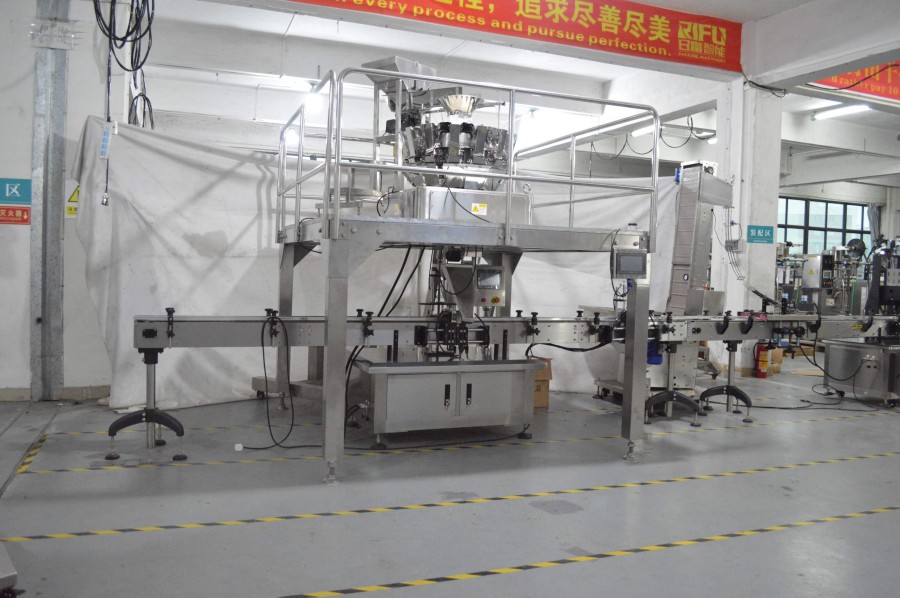
A turnkey project from a packaging machinery manufacturer provides a complete production solution covering design, equipment manufacturing, installation, testing, and technical support. It allows companies to start production faster with fewer supplier coordination issues. A professional project can reduce installation delays by 20–40%, improve line efficiency by 15–30%, and support production capacities ranging from hundreds to tens of thousands of packages per hour.
A turnkey packaging project starts with understanding the customer’s production requirements. The manufacturer reviews product features, packaging materials, output targets, factory space, automation requirements, and industry regulations before designing the system.
For example, a food company producing 15,000 packaged products per hour may require different equipment compared with a pharmaceutical company handling 300 sterile packages per minute. Engineers usually evaluate:
-
Product size, weight, and filling characteristics
-
Packaging material compatibility
-
Required production speed
-
Available factory layout
-
Cleaning and maintenance requirements
-
Safety and quality standards
According to industrial project management practices, requirement analysis completed before equipment design can reduce later engineering changes by around 25% because the supplier understands the complete production environment before manufacturing begins.
A turnkey supplier does not only provide machines. The supplier designs how different machines work together as one production line.
After collecting technical information, the manufacturer develops the complete packaging line design. This includes equipment selection, production flow planning, electrical systems, control software, and future expansion options.
A modern packaging line may include:
| System | Function |
|---|---|
| Feeding system | Transfers products into the packaging process |
| Filling equipment | Controls product quantity and accuracy |
| Sealing system | Protects package quality |
| Labeling unit | Applies product information |
| Inspection equipment | Checks packaging defects |
| Conveyor system | Connects production stages |
| Robotic unit | Handles automatic loading or palletizing |
Companies increasingly use automatic packaging machines because they can maintain stable production speed while reducing manual operations. In many industries, automated packaging equipment can improve labor efficiency by 30–50% compared with traditional manual processes.
The design stage determines how well the entire system performs, so manufacturers usually create engineering drawings, production simulations, and equipment layouts before production begins. A well-planned line can avoid problems such as conveyor delays, inconsistent product feeding, or incompatible machine communication.
Once the design is confirmed, the project enters equipment manufacturing. This stage combines mechanical processing, electrical assembly, software programming, and quality inspection.
The production process often includes:
| Manufacturing Step | Main Work |
|---|---|
| Component preparation | Selecting motors, sensors, frames, and control parts |
| Mechanical assembly | Building machine structures and moving systems |
| Electrical installation | Connecting control cabinets and sensors |
| Software setup | Programming operation functions |
| Factory testing | Checking speed, accuracy, and stability |
For customized packaging projects, manufacturing time commonly ranges from 8 weeks to 12 months depending on equipment complexity. A standard packaging unit may require several months, while a complete automated factory line requires longer engineering coordination.
Factory acceptance testing is performed before shipment. During this process, customers can check whether the equipment meets agreed specifications.
Testing items normally include:
-
Production speed verification
-
Packaging accuracy measurement
-
Safety function inspection
-
Noise level evaluation
-
Continuous operation testing
Many manufacturers use several hours or multiple production cycles for acceptance testing. For example, a packaging line designed for 24-hour operation may be tested under continuous running conditions to confirm mechanical stability before delivery.
After factory approval, transportation and installation begin. The turnkey supplier sends engineers to the customer’s facility to complete equipment positioning, connection, calibration, and production adjustment.
Installation usually involves several steps:
-
Machine placement according to factory drawings
-
Electrical and pneumatic connection
-
Communication setup between machines
-
Initial product testing
-
Production parameter adjustment
The commissioning period is often completed within several days to several weeks depending on line size. Large packaging systems with multiple production sections may require 4–8 weeks of adjustment before reaching stable output.
A complete installation process requires cooperation between mechanical engineers, electrical engineers, software technicians, and customer operators.
After the equipment reaches normal operation, the manufacturer provides operator training. Training normally covers machine operation, daily inspection, maintenance schedules, and troubleshooting methods.
A trained operator can reduce avoidable equipment stops because many production interruptions come from incorrect settings or delayed maintenance. Industrial maintenance reports indicate that regular operator training can reduce basic operating mistakes by approximately 20–30%.
Training materials usually include:
| Training Area | Content |
|---|---|
| Operation | Starting, stopping, and adjusting equipment |
| Maintenance | Cleaning and replacing wear parts |
| Safety | Machine protection procedures |
| Troubleshooting | Identifying common production issues |
After handover, long-term technical support becomes part of the turnkey service. Packaging machinery manufacturers usually provide remote assistance, spare parts supply, maintenance advice, and equipment upgrades.
A professional after-sales program may include:
-
Remote equipment inspection
-
Software adjustment support
-
Replacement part planning
-
Regular maintenance recommendations
-
Production improvement suggestions
For companies operating packaging lines for more than 10 years, continuous technical support helps maintain stable performance and extend equipment service life. Proper maintenance can increase equipment availability by 10–20% compared with systems without planned service programs.
Turnkey projects also help companies manage future production growth. When output requirements increase, the original manufacturer can modify the system based on existing equipment information.
Possible upgrades include:
-
Adding additional packaging stations
-
Increasing conveyor capacity
-
Installing robotic handling systems
-
Improving inspection technology
-
Connecting production data systems
A single supplier managing the entire project reduces communication difficulties compared with purchasing machines from multiple companies. With several independent suppliers, companies may need to coordinate separate technical standards, installation schedules, and service responsibilities.
| Traditional Purchasing Method | Turnkey Project |
|---|---|
| Multiple equipment suppliers | One responsible manufacturer |
| Separate installation processes | Integrated project management |
| More coordination work | Unified technical communication |
| Different service systems | Centralized support |
Since 2020, many manufacturers have increased investment in automated production because companies require faster output adjustment, better quality control, and lower dependence on manual processes. A turnkey packaging solution allows businesses to move from production planning to commercial operation through one coordinated process.
The success of a turnkey project depends on accurate engineering, reliable equipment manufacturing, professional installation, and long-term technical service. When all stages are managed together, companies can achieve faster production startup, stable packaging quality, and easier future expansion.